


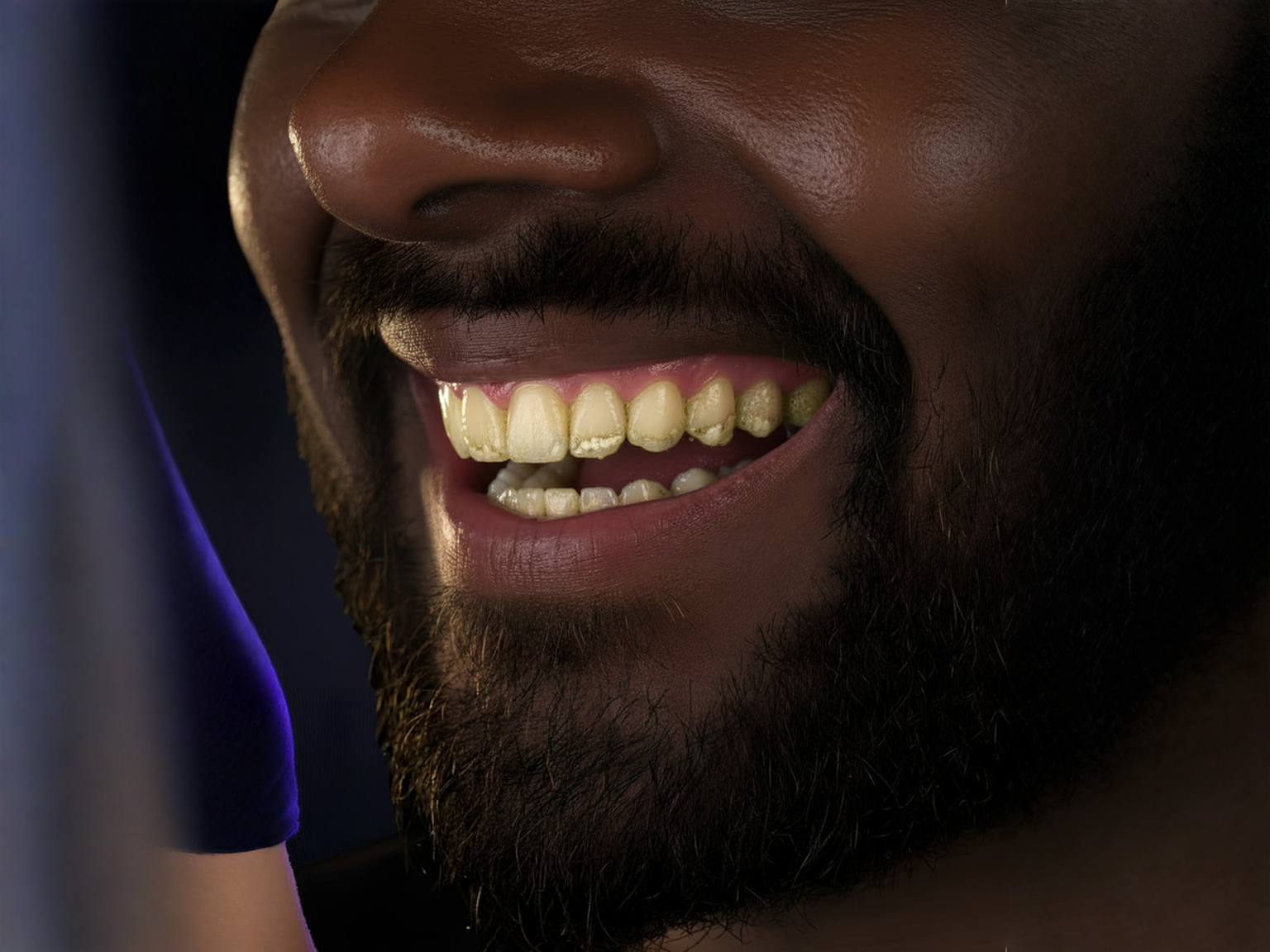

Men are not great at going to the dentist. This is hardly breaking news. But what many don’t realise is that even the men who brush twice daily and swear by their electric toothbrushes are fighting biology itself. Testosterone, the very hormone that fuels male strength, libido, and drive, quietly sabotages oral health in ways most men never see coming.
It starts with plaque. Testosterone increases the proteins in saliva that oral bacteria feed on, creating a stickier, more hospitable environment for biofilm to form. The result is faster accumulation of plaque, which, if not meticulously removed, hardens into tartar and inflames the gums. This is why boys and girls have similar rates of gum disease until puberty, when male rates begin to climb sharply and never look back.
By adulthood, the disparity is stark. Men are not only more prone to developing periodontal disease, but they also tend to develop it earlier and more severely than women. And because gum disease is largely silent in its early stages, many men don’t notice anything wrong until their gums bleed during flossing, their breath draws complaints, or a dentist delivers the unwelcome news that bone loss has already begun.
The consequences, however, are not confined to the mouth. Periodontal disease creates chronic inflammation that does not stay put. Bacteria from infected gums can enter the bloodstream and travel to other parts of the body. The links are now well established: men with advanced gum disease have higher rates of heart attack, stroke, and poorly controlled diabetes. There is also evidence tying periodontal inflammation to erectile dysfunction, as compromised blood vessels affect more than just the heart.
Yet dental care remains one of the lowest priorities in men’s health. Surveys consistently show that men are less likely than women to schedule preventive checkups, more likely to cancel appointments, and far more likely to show up only when something hurts. By then, a simple course of treatment has often become a costly and lengthy ordeal.
Work and family responsibilities shoulder some of the blame, but so does a cultural reluctance to acknowledge vulnerability. A toothache feels minor compared to chest pain or a suspicious mole. The mouth is treated as a separate mechanical system rather than an integral part of the body. This compartmentalisation is precisely what allows small problems to become major ones.
The good news is that the hormonal hand men have been dealt is not a life sentence. Plaque may form faster, but consistent disruption—brushing, flossing, and professional cleaning—keeps it in check. The fluoride in toothpaste remains effective regardless of testosterone levels. The same dietary choices that protect the heart, namely limiting sugar and avoiding tobacco, also protect the gums.
