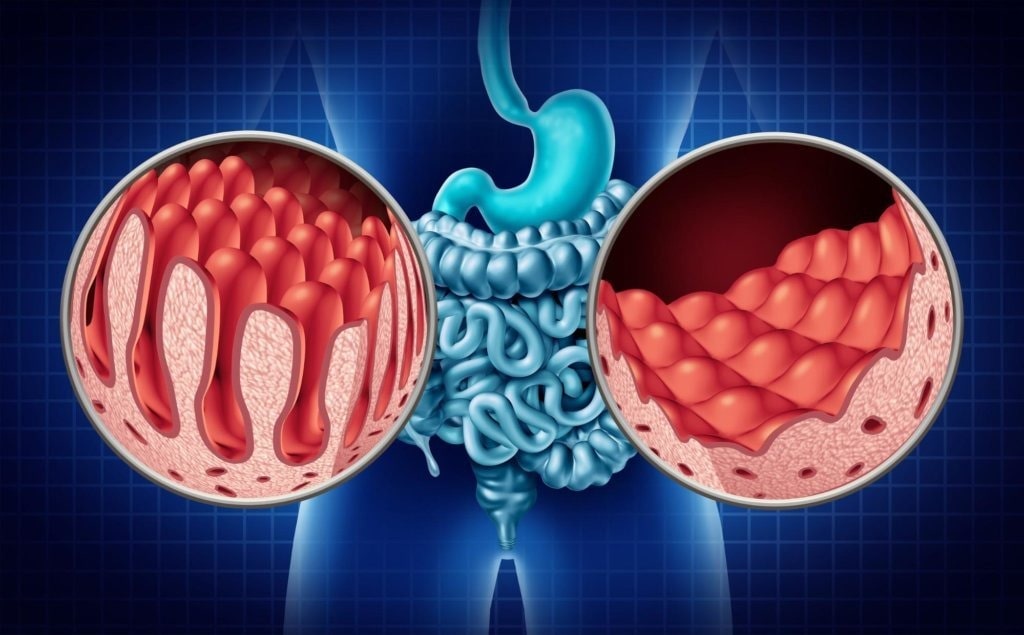



Celiac disease is an autoimmune disorder triggered by gluten, a protein found in wheat, barley, and rye. When individuals with celiac disease consume gluten, their immune system mistakenly attacks the small intestine, leading to inflammation and damage to the intestinal villi—tiny, finger-like projections lining the small intestine. This damage impairs nutrient absorption and can lead to various complications if untreated.
The pathophysiology of celiac disease involves both genetic and environmental factors. Genetically, individuals with certain alleles of the human leukocyte antigen (HLA), particularly HLA-DQ2 and HLA-DQ8, have an increased susceptibility to the disease. Upon gluten exposure, the immune system inappropriately activates T cells in the small intestine, producing an inflammatory response. This response leads to the destruction of villi, a process known as villous atrophy, which reduces the surface area available for nutrient absorption. Over time, this can lead to malnutrition, anemia, osteoporosis, and other health issues.
In terms of incidence, celiac disease affects roughly 1% of the global population, although it is more commonly diagnosed in Western countries. It is particularly prevalent in individuals of European descent. Improved awareness and diagnostic methods have led to an increase in diagnosis rates, although many cases remain undiagnosed or misdiagnosed as other gastrointestinal disorders, such as irritable bowel syndrome (IBS). Celiac disease can develop at any age but often appears in childhood or early adulthood.
Managing celiac disease primarily involves a strict, lifelong gluten-free diet, which can prevent further intestinal damage and alleviate symptoms. Early diagnosis and dietary adherence are essential to avoiding complications and improving quality of life for those affected. Research continues to explore alternative treatments and a potential cure, but currently, a gluten-free diet remains the cornerstone of celiac disease management.
Trending
- 2026 China–West Africa Medical & Health Industry Expo & AI Diagnosis Summit: Highlights and Overview.
- 2026 Health Community of West Africa Summit and Expo Drives New Health Partnerships Through Strategic MoU Signings.
- Health Community of West Africa Association Welcomes and Honors Partners Ahead of 2026 China West Africa Medical Summit and Expo
- Health Community of West Africa Association Honours Ministry of Health for Support to the 3rd China–West Africa Medical & Expo Summit
- 3rd China–West Africa Medical & Health Industry Expo Opens in Accra, Driving Innovation and Stronger Healthcare Cooperation Across West Africa
- Official Press Launch Sets the Stage for the 3rd China–West Africa Medical & Health Industry & AI Diagnosis & Project Cooperation Summit & Expo 2026.
- HCOWAA Calls for Pharmacy-Led Solutions to Bridge Primary Healthcare Gaps.
- HCOWA Reinforces Its Commitment to Advancing Healthcare Through Prison Health Support Ahead of the 2026 China–West Africa Medical and Health Industry Expo.