


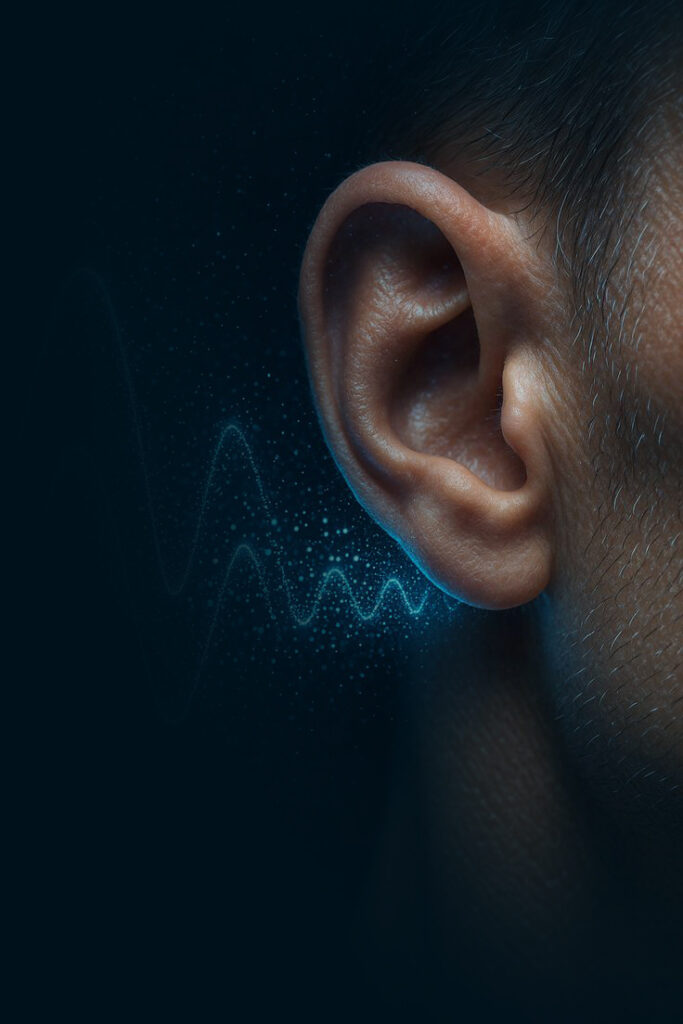

The human ear is a complex and delicate organ that serves as the body’s gateway for sound and a center for spatial awareness. Often mistakenly thought of as just the visible part on the side of the head, the ear is actually a much deeper and more intricate structure. It is housed partly within the hardest bone of the skull and is divided into three distinct sections that work in perfect sequence.
The first section is the outer ear, which includes the visible, curved pinna and the ear canal. This part acts as a natural funnel, collecting sound from the environment. At the end of the canal lies the eardrum, a thin, tight membrane that marks the entrance to the middle ear. The middle ear is a small, air-filled cavity containing the three smallest bones in the human body, known collectively as the ossicles. These bones form a delicate chain that bridges the gap between the eardrum and the inner ear. The inner ear is the most complex region, consisting of the cochlea, a structure shaped like a snail’s shell, and a network of fluid-filled tubes and chambers known as the vestibular system. Together, these parts form an organ of remarkable precision and sensitivity.
The ear performs two primary and essential functions for the human body.
The first and most well-known function is hearing. The ear is responsible for capturing physical sound waves from the air and transforming them into electrical signals that the brain can interpret. The outer ear collects these waves and channels them inward. The middle ear amplifies the resulting vibrations, and the inner ear converts them into nerve impulses. This entire process happens continuously and instantaneously, allowing us to communicate, enjoy music, and stay aware of our surroundings.
The second major function of the ear is to maintain balance. Located in the inner ear, the vestibular system constantly monitors the position and movement of the head. As the head moves, fluid inside these structures shifts, sending signals to the brain about the body’s orientation in space. This function works automatically to keep us upright, steady, and coordinated, whether we are standing still, walking, or turning quickly. In essence, the ear not only connects us to the world of sound but also grounds us physically to the world beneath our feet.
