








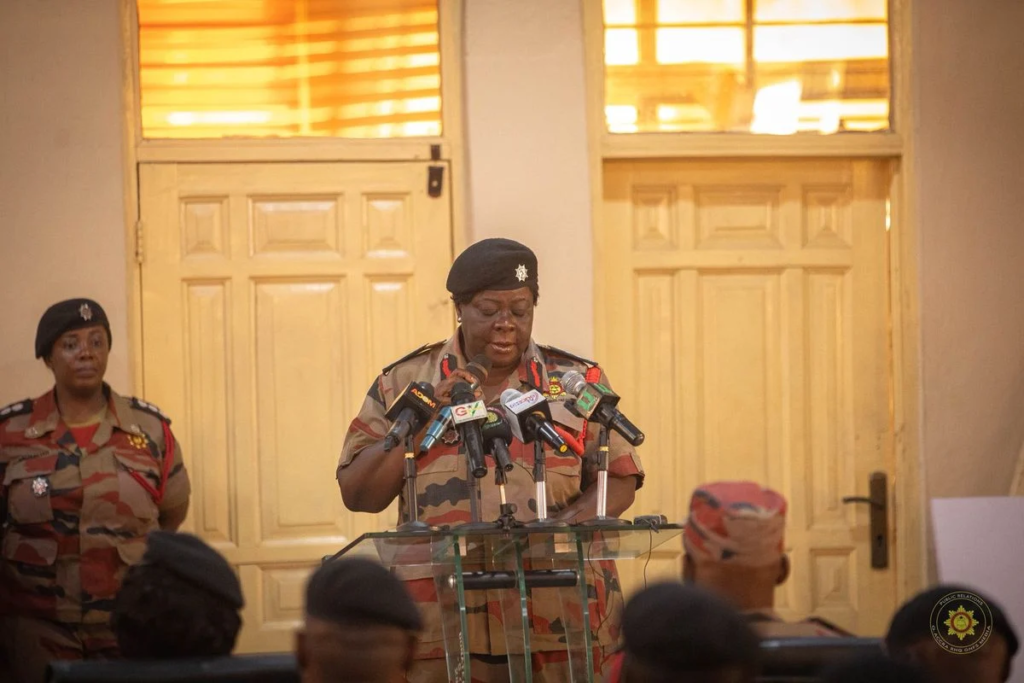


The Ghana National Fire Service has launched a nationwide capacity-building initiative aimed at strengthening emergency response—an intervention expected to improve public health outcomes during fires and disasters.
Chief Fire Officer Daniella Mawusi Ntow Sapong announced the move at the opening of the GNFSST 1-26 Fire Police “Train the Trainer” Course at the Fire Academy and Training School in Jamestown on April 20. She stressed that equipping Fire Police personnel with modern security, discipline, and protective skills is essential for managing emergency scenes and reducing injury and fatality risks.
The training comes amid growing concerns over the impact of poorly coordinated emergency responses on survival rates. Health experts note that delays in securing incident scenes often hinder timely medical care, increasing the likelihood of preventable deaths and complications.
“This training is critical to strengthening professionalism and safety within the Service,” the Chief Fire Officer stated, adding that well-managed emergency environments allow first responders and medical teams to operate more efficiently.
The three-week programme will prepare selected personnel to serve as trainers, expanding the Service’s capacity nationwide. Participants will receive intensive instruction in crowd control, incident coordination, and safety protocols—key components in protecting both victims and responders.
The initiative is being delivered in collaboration with the Ghana Armed Forces, with support from the Military Police. Commanding Officer Jacqueline Dela Galley said the partnership would enhance skills in intelligence gathering, VIP protection, and professional conduct, all of which are critical in high-risk emergency settings.
Public health analysts say the move reflects a broader shift toward integrating emergency services into health systems strengthening. Efficient fire and rescue operations play a crucial role in trauma care, particularly in urban centres where population density increases the risk and scale of emergencies.
Officials believe that improved coordination and disciplined scene management will lead to faster response times, safer evacuations, and better health outcomes. As Ghana continues to urbanise, such investments are seen as vital in building a resilient system capable of protecting lives during crises.
Source: 3News


