


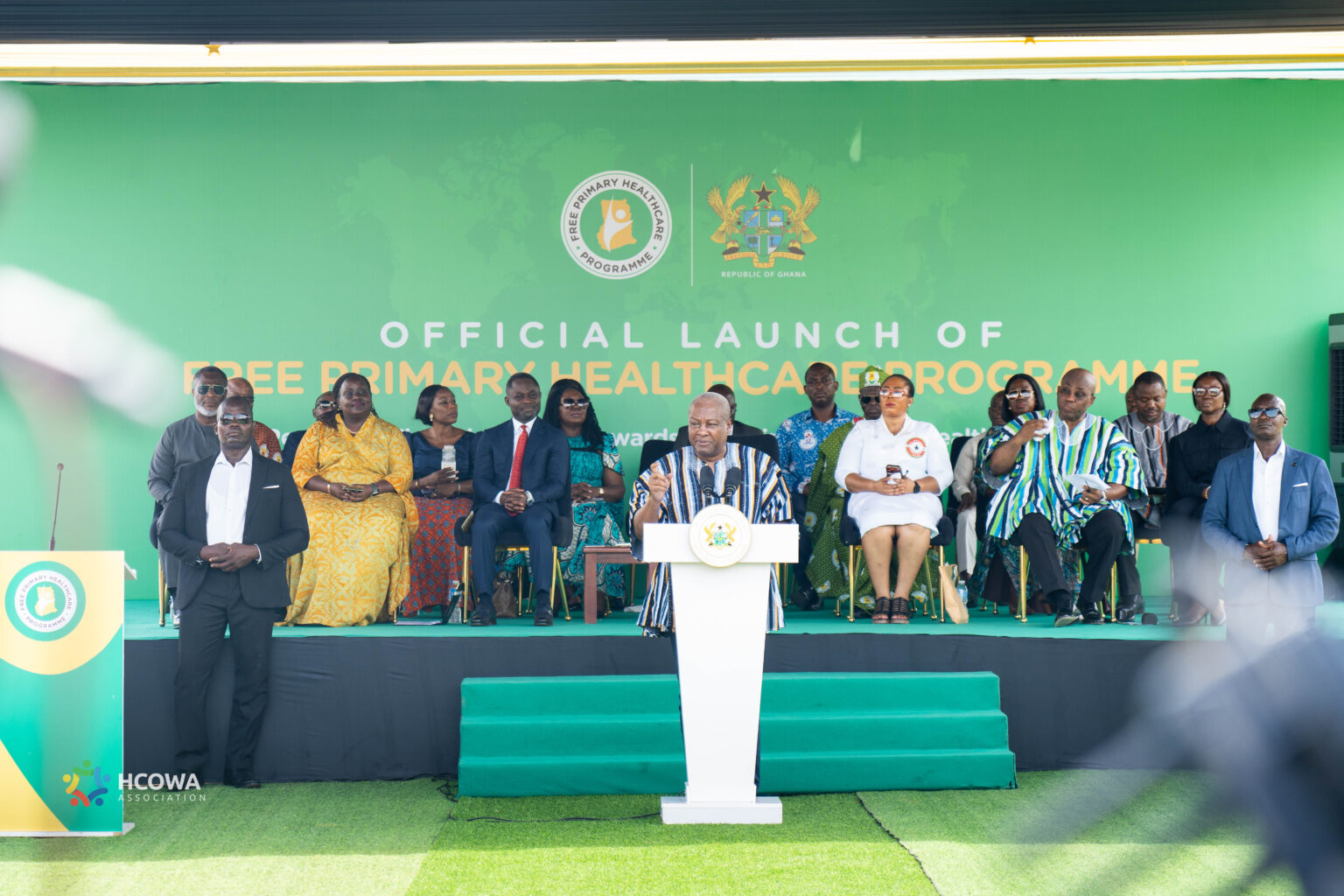

The Health Community of West Africa Association has joined the Government of Ghana and the Ghana Health Service in the official launch of the Free Primary Healthcare Policy, a flagship initiative spearheaded by the President of the Republic, John Dramani Mahama.
The launch ceremony took place at the Shai-Osudoku District Hospital in the Greater Accra Region and brought together a distinguished gathering of stakeholders. Among them were the Minister of Health, the Director-General of the Ghana Health Service, the Chief Executive of the National Health Insurance Authority, the Country Representative of the World Health Organization, and the President of the Health Community of West Africa Association, Sihong Jiang.

In his address, President Mahama explained that the Free Primary Healthcare Policy is designed to ensure that every citizen and legal resident can access essential healthcare services at no cost at the point of care.
“This initiative also provides an opportunity to enroll individuals onto the National Health Insurance Scheme so they can benefit from a wider range of healthcare services,” he stated.
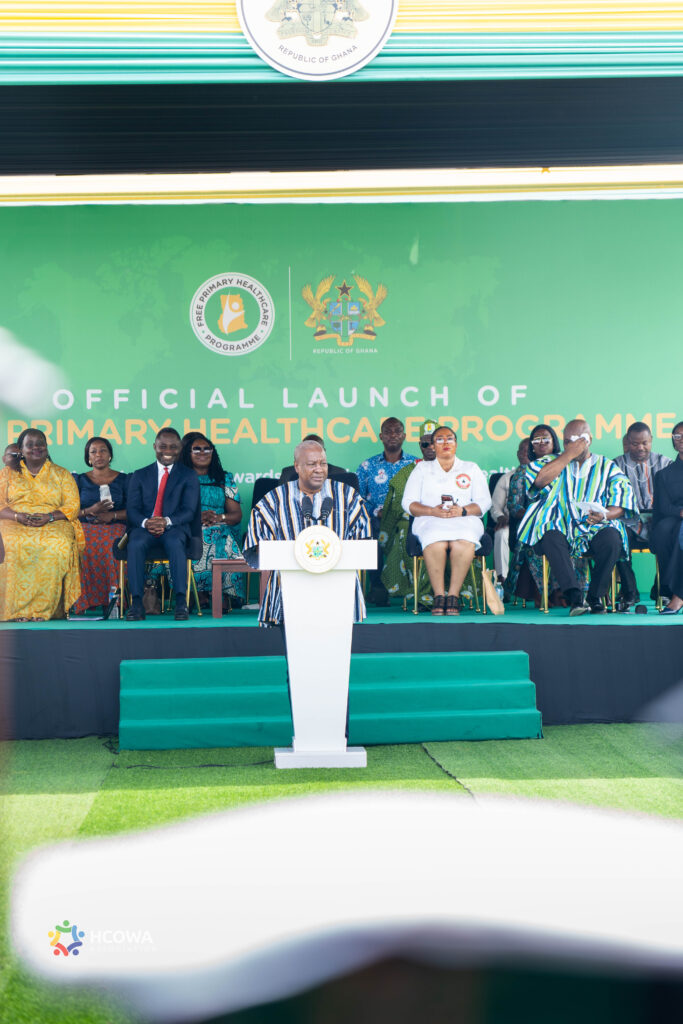
He further emphasized that the policy aims to remove financial barriers and promote equitable access to healthcare, especially for underserved communities. The government will begin implementation in 150 districts across the country, with a strong focus on rural and hard-to-reach areas.
As part of the rollout, the government will equip Community-based Health Planning and Services (CHPS) compounds, health centres, and public health units of polyclinics. Funding for the programme will be drawn from sources including the NHIS levy, SSNIT contributions, and government budgetary allocations.
President Mahama also highlighted a shift from curative to preventive healthcare under the policy. Key services to be provided include breast cancer screening, blood pressure checks, blood glucose testing, body mass index assessments, mental health screening, vision screening for infants, and comprehensive health checks for children and adolescents. Additional services include referrals for haemoglobin electrophoresis for newborns of sickling-positive mothers.
The Minister of Health, Kwabena Mintah Akandoh, noted that the initiative will expand primary healthcare infrastructure, particularly in rural areas. This includes the deployment of mobile health vans—locally known as “Onuador” vans—and the establishment of more health posts to reach remote populations.

He added that the government will introduce incentives such as allowances and training opportunities to attract and retain health workers in deprived areas, alongside broader sector improvement interventions and support for community pharmacies.
The Minister also encouraged citizens to play an active role by going for regular health screenings, keeping their NHIS membership active, following medical advice, and encouraging family members to seek preventive care.
Also present at the event, Greater Accra Regional Minister Linda Ocloo welcomed the initiative and pledged the full support of regional, municipal, and district authorities to ensure its effective implementation.
The ceremony concluded with the commissioning of a medical kiosk and the deployment of mini health vans designed to provide community outreach and screening services.

The Health Community of West Africa’s participation in the launch underscores its commitment to supporting healthcare development across West Africa through strategic partnerships, innovation, and investment in public health initiatives.
