









Ghana’s Traditional Medicine Practice Council (TMPC) has announced a major regulatory and policy drive to strengthen the role of traditional medicine in improving women’s health while ensuring safety, quality, and accountability across the sector.
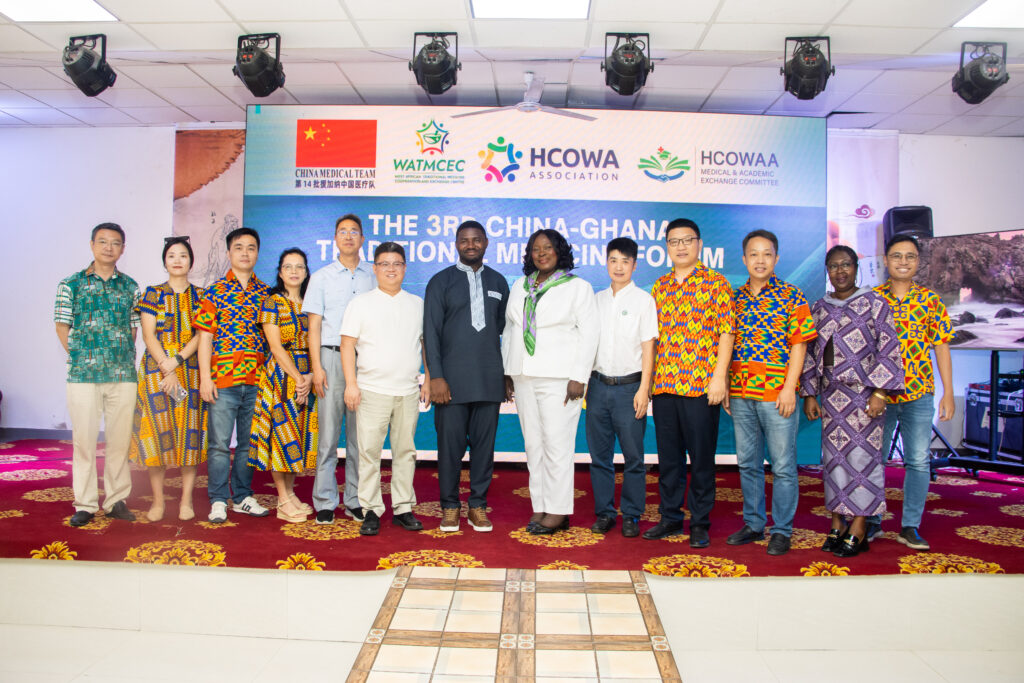
Speaking at the 3rd China–Ghana Traditional Medicine Forum at the Confucius Institute, University of Ghana, the Registrar of the Council, Dr. Yakubu Tobor Yusuf, said the moment calls for decisive action, noting that “ancient wisdom must now meet modern innovation” to deliver real health outcomes for women.
“The theme of this forum, ‘Empowering Women, Sharing Health,’ is not merely aspirational—it is a clarion call to action, when we empower women through traditional medicine, we empower entire generations.” ,” Dr. Yusuf said.

He disclosed that TMPC is reviewing Act 575 and working toward the passage of a new bill to strengthen regulation of practitioners and traditional medicine products. According to him, the reforms will close longstanding gaps in oversight and professional accountability.
“Let me be clear: empowering women through traditional medicine requires uncompromising standards, women and their families deserve safe, effective, evidence-based care.”
Dr. Yusuf announced that the Council will introduce mandatory Good Manufacturing Practices (GMP) for all traditional medicine products and develop comprehensive standards of practice for herbalists, traditional birth attendants, bone setters, and other practitioners. He stressed that regulation should be viewed as a growth enabler rather than a restriction.
“Regulation is not a barrier to growth—it is the foundation upon which sustainable growth is built,” he said.
Highlighting the importance of the sector, Dr. Yusuf revealed that “approximately 70 percent of Ghanaians rely on traditional medicine as part of their primary healthcare,” a reality he said demands urgent and strategic policy attention.
Women’s health, he noted, remains a priority mandate for the Council. In line with directives from the Ministry of Health, TMPC has established a dedicated Gender Desk to anchor all women-focused initiatives.
“This is not tokenism—this is transformative policy in action,” he emphasized.
Among the key interventions is a national focus on obstetric fistula prevention and education, particularly in rural areas where access to skilled maternal care remains limited. Dr. Yusuf said traditional birth attendants—often the first point of care for women—are being empowered with standardized training and referral systems.
“Traditional birth attendants are sometimes the only healthcare providers available to women in remote communities, by equipping them with proper training and direct links to emergency services, we are building a safety net that can save lives.”
He added that TMPC is partnering with the National Ambulance Service to ensure timely referrals and emergency response for maternal complications.

On international collaboration, Dr. Yusuf highlighted Ghana’s growing partnership with the World Health Organization, noting that the Council is aligning its regulatory framework with the WHO Traditional Medicine Strategy 2025–2034. He also pointed to strengthened Ghana–China cooperation following recent engagements with Chinese traditional medicine institutions.
“These collaborations are not ceremonial, they are strategic investments in building a world-class traditional medicine sector for Ghana.” He stated.
Dr. Yusuf concluded with a call for collective responsibility among policymakers, practitioners, researchers, and international partners, urging them to turn dialogue into action.